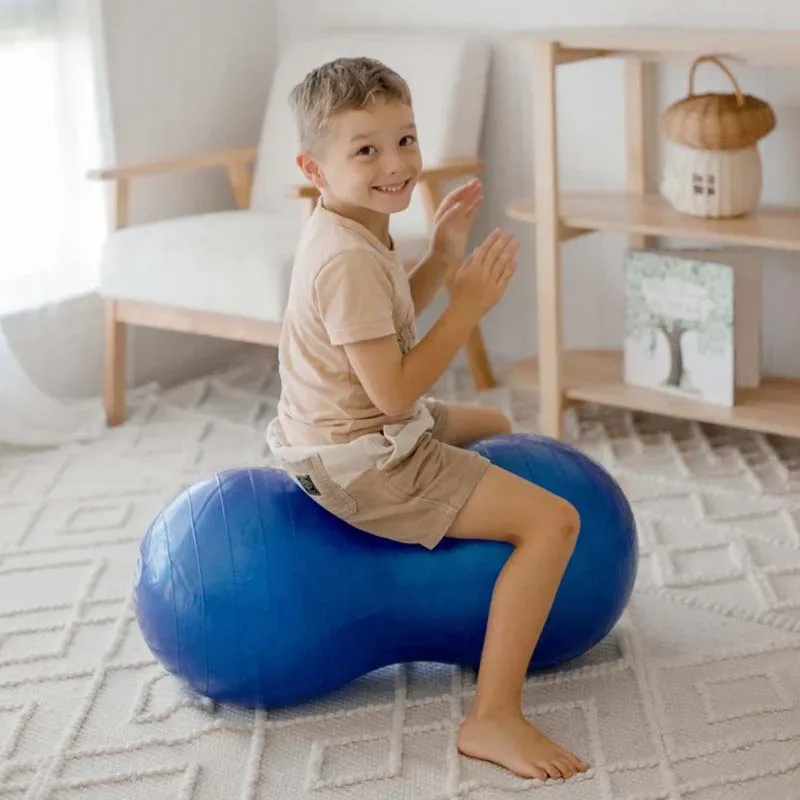
Peanut Ball for Kids | Sensory Therapy & Balance Exercise Fitness Ball
A peanut ball is an inflatable, oblong-shaped exercise ball that mimics two fitness balls joined together with a dipped middle saddle. Because it only rolls forward and backward, it offers much more predictable stability than a traditional round exercise ball.
Primary Uses
1. Labor and Childbirth Support
Medical professionals widely utilize peanut balls as low-risk, evidence-based birthing tools. They are the gold standard for individuals laboring in bed or those who have received an epidural and cannot move freely.
2. Physical Therapy and Pediatric Care
The unidirectional rolling motion makes it an exceptional tool for clinical rehabilitation.
Sensory Integration & Kids' Therapy: Pediatric therapists use it to help children build core strength, motor coordination, and bilateral tracking. Placing a child prone over the ball aids in upper extremity weight-bearing tolerance. Postural Rehabilitation: Therapists can share the ball with a patient to provide manual stabilization while targeting localized spine, pelvis, or core muscle recovery.
How to Use a Peanut Ball During Labor
Side-Lying Position: Lie on your side and place the ball between your knees and thighs, flexing your top leg forward. This opens the top of the pelvis.
Ankle-Opening Position: Put the peanut ball between your ankles with your knees close together to open the bottom of your pelvis.
Flying Cowgirl: Rest on your side with your top knee draped forward over the ball while surging your pelvis forward. This helps engage a baby that is riding high.
Semi-Sitting / Throne: Recline the head of the hospital bed up high and straddle the ball between your knees to let gravity assist the delivery.